
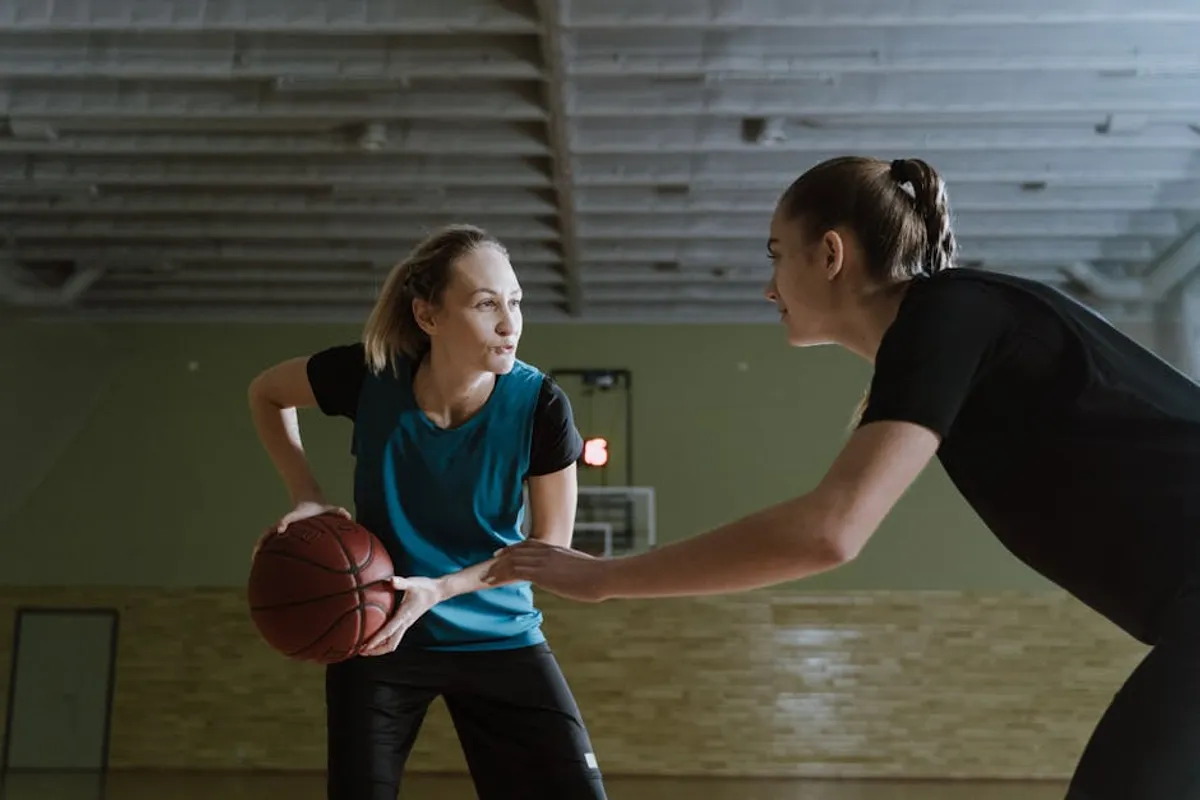
Basketball demands a unique blend of physical attributes: explosive power, sustained endurance, rapid agility, and precise coordination. Unlike general fitness routines, basketball conditioning specifically targets the physiological requirements of the game, translating directly into enhanced on-court performance and reduced injury risk. This isn't merely about running laps; it's about developing the capacity to execute repeated sprints, lateral shuffles, vertical jumps, and defensive stances for an entire game, often under anaerobic stress. Understanding these specific demands is the first step toward building a conditioning program that truly impacts your play.
Core Physical Demands of Basketball
Effective basketball conditioning programs are built upon addressing the sport's fundamental physical challenges. These challenges dictate the type of exercises and training methodologies most beneficial for players.
Cardiovascular Endurance: Sustaining High-Intensity Play
Basketball is an intermittent sport, characterized by short bursts of intense activity followed by brief periods of active recovery. This requires both aerobic and anaerobic conditioning. Aerobic capacity allows for quicker recovery between high-intensity efforts, while anaerobic power enables repeated explosive movements without excessive fatigue.
- Interval Sprints: Mimic game-like scenarios by alternating maximal effort sprints (e.g., full-court dashes) with active recovery (e.g., light jogging or walking). This builds anaerobic power and improves lactic acid tolerance.
- Suicide Runs (Shuttle Runs): Involve sprinting to various markers on the court and returning to the start, emphasizing rapid acceleration, deceleration, and change of direction. This directly simulates fast breaks and defensive transitions.
- Court-Specific Drills: Incorporate drills that combine dribbling, shooting, and defensive slides into continuous circuits to build sport-specific endurance under fatigue.
Agility and Quickness: Mastering Directional Changes
The ability to change direction rapidly and efficiently is paramount in basketball, influencing offensive moves, defensive containment, and transition play. Agility training focuses on accelerating, decelerating, and re-accelerating in multiple planes of motion.
Best for: Players needing to improve their first step, defensive slides, and ability to navigate screens.
- Cone Drills:
- T-Drill: Sprint forward, shuffle left, shuffle right, then backpedal to the start. Develops multi-directional movement.
- L-Drill (3-Cone Drill): Sprint, cut, sprint, cut, sprint. Focuses on sharp, explosive changes of direction.
- Ladder Drills: Improve foot speed, coordination, and rhythm through various patterns (e.g., Icky Shuffle, In-Out). While not directly game-speed, they build foundational quickness.
- Defensive Slide Drills: Practice maintaining a low stance and moving laterally across the court, reacting to imaginary offensive players.
Strength and Power: Dominating the Paint and Boards
Explosive power is crucial for jumping, sprinting, and driving to the basket. Strength provides the foundation for power, protecting against injury and enabling players to hold their ground in physical contests.
Best for: Enhancing vertical leap, sprint speed, and physical resilience.
Lower Body Power and Strength
- Plyometrics:
- Box Jumps: Develop explosive leg power for rebounding and shooting over defenders. Focus on soft landings.
- Broad Jumps: Improve horizontal power, essential for fast breaks and quick drives.
- Depth Jumps: Advanced plyometric that trains the body to absorb force and immediately produce a powerful counter-movement.
- Weight Training:
- Squats (Barbell, Goblet): Build foundational leg and core strength.
- Lunges (Walking, Reverse): Improve single-leg strength and stability, crucial for cutting and jumping off one leg.
- Deadlifts (Conventional, Romanian): Strengthen the posterior chain (glutes, hamstrings, lower back) for powerful hip extension.
Core Strength and Stability
A strong core transfers power from the lower body to the upper body, improves balance, and protects the spine during dynamic movements.
- Planks (Front, Side): Develop isometric strength in the core stabilizers.
- Medicine Ball Throws: Rotational throws and slams build explosive core power relevant to passing, shooting, and boxing out.
- Russian Twists: Enhance rotational core strength, vital for pivoting and shot mechanics.
Pro Tip: Prioritize proper form over heavy weight or high speed, especially when starting a new exercise. Incorrect technique not only diminishes the exercise's effectiveness but significantly increases the risk of injury, sidelining you from the court. Consult a qualified strength and conditioning coach to ensure your movements are efficient and safe.
Integrating Conditioning for Peak Performance
A well-structured conditioning program isn't a collection of random exercises; it's a progressive plan that adapts to the player's development and the season's demands. Consistency and progressive overload are key.
Periodization: Adapting to the Season
Training should vary throughout the year to optimize performance and prevent burnout.
- Off-Season: Focus on building a strong foundation of strength, power, and aerobic capacity. This is the time for significant gains in physical attributes.
- Pre-Season: Transition to more sport-specific drills, increasing intensity and integrating conditioning with basketball skills. Reduce heavy lifting volume while maintaining intensity.
- In-Season: Maintain fitness levels with shorter, high-intensity sessions. Prioritize recovery and injury prevention. Focus on maintaining power and agility without overtraining.
Recovery and Nutrition: Fueling Performance
No conditioning program is complete without adequate recovery and proper nutrition. Muscles grow and adapt during rest, not during workouts. Hydration, balanced macronutrient intake, and sufficient sleep are non-negotiable for maximizing training benefits and reducing fatigue.
Frequently Asked Questions
How often should I perform basketball conditioning exercises?
During the off-season, aim for 3-4 conditioning sessions per week, in addition to skill work. In-season, reduce to 1-2 focused sessions to maintain fitness without overtraining, prioritizing recovery between games.
What is the most important type of conditioning for basketball?
There isn't one "most important" type; basketball requires a balanced development of all physical attributes. However, anaerobic endurance and multi-directional agility are particularly critical due to the sport's intermittent, high-intensity nature.
Can playing basketball alone get me in peak condition?
While playing basketball improves sport-specific fitness, dedicated conditioning exercises target specific physical attributes (e.g., maximal vertical jump, isolated core strength) more effectively than playing alone. A structured program supplements game play for comprehensive development.
How long does it take to see results from a conditioning program?
Noticeable improvements in strength, endurance, and agility can typically be observed within 4-6 weeks of consistent, well-structured training. Significant long-term adaptations occur over several months of dedicated effort.