Mastering basketball defense from the outset establishes a crucial foundation for any player. While offensive skills often capture more attention, a strong defensive game dictates possession, controls game flow, and ultimately contributes to winning. For beginners, understanding core defensive principles isn't just about stopping an opponent; it's about developing court awareness, discipline, and the physical habits that enable long-term growth as a player. Neglecting these basics early on creates ingrained inefficiencies that are difficult to correct later. This guide outlines the fundamental techniques and strategic thinking necessary to build an effective defensive presence, focusing on actionable steps that beginners can integrate immediately into their practice and play.
Establishing a Solid Defensive Stance and Footwork
The bedrock of effective basketball defense begins with your stance and how you move your feet. Without proper balance and agility, all other defensive tactics become less effective. These initial steps are non-negotiable for beginners.
The Foundational Defensive Stance
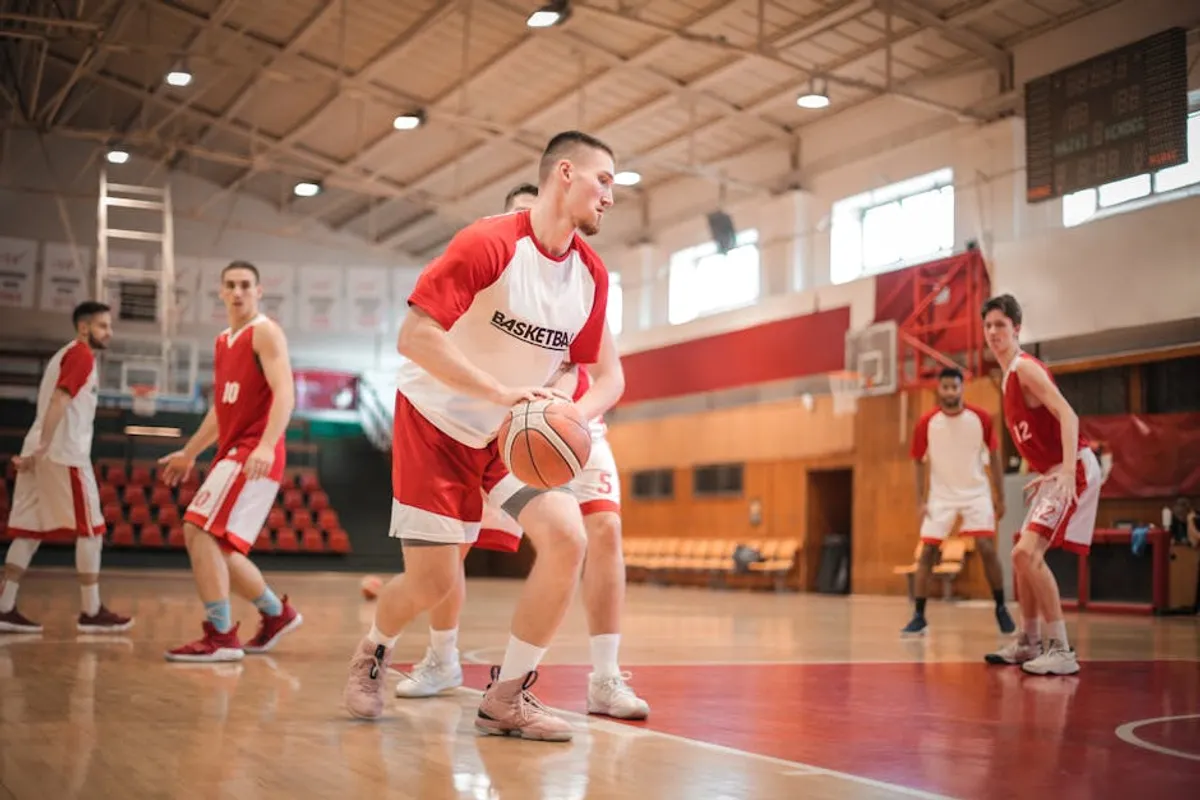
A correct defensive stance maximizes your ability to react quickly in any direction. Begin with your feet slightly wider than shoulder-width apart, ensuring your weight is distributed evenly over the balls of your feet, not your heels. Bend your knees significantly, lowering your hips as if you're about to sit in a chair. Your back should remain straight, but with a slight forward lean from the waist. Keep your head up, maintaining eye contact with your opponent's chest or hips, rather than their eyes or the ball, as these can be deceptive. Your arms should be extended out to your sides, elbows bent, with hands active and ready to deflect passes or contest shots. This low, wide, and active posture allows for explosive lateral movement and quick changes in direction.
Executing Shuffle Steps
The shuffle step is the primary method of lateral movement in defense. It allows you to stay in front of an offensive player without crossing your feet, which would compromise your balance and speed. To execute a shuffle step, push off with your lead foot in the direction you want to move, taking a short, quick step. Immediately follow with your trailing foot, bringing it to a position that maintains your wide, athletic stance. Never allow your feet to come together or cross. The steps should be small, quick, and continuous, maintaining a low center of gravity throughout the movement. Practice shuffling both left and right, covering ground efficiently while staying balanced and ready to react.
On-Ball Defense: Guarding the Dribbler
Once you've established your stance and footwork, applying these to an opponent with the ball requires specific positioning and active hand use.
Maintaining Optimal Defensive Position
The core principle of on-ball defense is to always stay between your opponent and the basket. This "man in the hole" philosophy forces the offensive player to move away from their primary scoring threat. When guarding an opponent, position yourself approximately an arm's length away, adjusting based on their speed and shooting range. If they are a strong shooter, close the gap slightly; if they are a quick driver, give yourself a bit more space to react. Your goal is to dictate their movement, forcing them towards the sidelines or baseline rather than allowing a direct path to the hoop.
Active Hands and Pressure
While maintaining proper body position, your hands must remain active. One hand should be low, ready to deflect a dribble or disrupt a pass. The other hand should be higher, prepared to contest a shot without fouling. Avoid reaching excessively, as this can lead to fouls or compromise your defensive stance, allowing the offensive player to blow by you. Instead, use quick, short jabs with your hands to bother the dribbler, making them uncomfortable. The objective is to make every offensive action difficult, not necessarily to steal the ball with every attempt.
Pro Tip: When guarding an opponent, focus on their hips, not the ball. The hips are the center of gravity and provide the most reliable indicator of where the player intends to move. Reacting to hip movement rather than head fakes or ball movement will significantly improve your defensive anticipation and positioning.
Off-Ball Defense: Playing Away from the Ball
Defense isn't just about guarding the player with the ball. Effective off-ball defense is equally critical for team success, preventing easy passes and offering help to teammates.
Denying the Pass and Maintaining Vision
When your opponent doesn't have the ball, your primary objective is to prevent them from receiving a pass in a dangerous position. This involves "denying the pass" by positioning yourself between your opponent and the player with the ball. You should be close enough to touch your opponent with an arm, creating a barrier. Crucially, maintain "ball-you-man" vision: you should be able to see both the ball and your assigned player simultaneously. This usually means turning your head slightly and using your peripheral vision. This positioning forces the offense to make longer, riskier passes or to move without the ball to get open.
Understanding Help Defense Principles
Help defense is the coordinated effort of the entire team to stop an offensive threat. If your teammate gets beaten by their dribbler, it's your responsibility to "help" by stepping into the driving lane to stop the penetration. This often means leaving your assigned player momentarily. However, help defense is a rotation: once you help, another teammate must rotate to cover your original assignment, or you must quickly recover to your player. For beginners, understanding the concept of "packing the paint" – keeping defenders inside the key to deter drives – is a good starting point. Always be ready to step over and assist a struggling teammate, then quickly recover to your own assignment once the immediate threat is contained.
Rebounding Fundamentals: Securing the Possession
Defensive effort isn't complete until your team secures the rebound after a missed shot. Rebounding is a skill that directly impacts game outcomes.
Mastering the Box Out Technique
The box out is the fundamental technique for defensive rebounding. As soon as a shot goes up, turn and locate your assigned offensive player. Step into their path, making contact with your back or side, and extend your arms and elbows wide to create a barrier. Drive your hips into them to establish position, keeping your feet wide and knees bent. This prevents them from moving towards the basket for an offensive rebound. Once you have established position, jump aggressively for the ball, using both hands to secure it firmly. A successful box out ensures that even if you don't get the rebound, your opponent won't either, allowing a teammate to grab it.
Communication and Teamwork on Defense
Individual defensive skills are amplified exponentially through effective team communication. Talking on defense is not optional; it is essential.
Beginners should develop the habit of constant vocal communication from the first practice. This includes:
- "Ball!": Announcing who is guarding the player with the ball.
- "Help!": Calling out when a teammate needs assistance against a driving opponent.
- "Screen Left/Right!": Alerting a teammate to an impending screen.
- "Shot!": Signifying that a shot has been taken, prompting everyone to box out.
- "My Man!": Confirming you have your assignment covered.
This constant chatter provides crucial information, prevents miscommunications, and builds trust among teammates, making the entire defensive unit more cohesive and effective.
Developing Your Defensive Mindset
Effective defense in basketball requires more than just physical technique; it demands a specific mental approach. For beginners, cultivating a defensive mindset is about embracing effort, discipline, and resilience. Understand that defense is often about preventing, disrupting, and reacting, which can feel less immediately rewarding than scoring. However, every blocked shot, every deflected pass, every secured rebound directly contributes to your team's success. Focus on making small, consistent improvements in your stance, footwork, and communication. Celebrate defensive stops as much as offensive plays. This shift in perspective will not only make you a more complete player but also foster a deeper appreciation for the strategic nuances of the game.
Frequently Asked Questions
Q: How much space should I give an offensive player on defense?
A: Generally, an arm's length is a good starting point. Adjust closer for strong shooters and slightly further back for quick drivers to prevent them from blowing by you. The key is to stay balanced and ready to react.
Q: What is the most common mistake beginners make on defense?
A: Reaching in for steals excessively or standing upright. Both compromise your balance and stance, making it easy for the offensive player to drive past you or draw a foul. Focus on footwork and active hands without lunging.
Q: Is defense more important than offense for beginners?
A: Both are crucial, but a strong defensive foundation often translates to better overall play. Defense teaches discipline, effort, and court awareness, which are transferable skills that enhance offensive capabilities over time. It's often said that "defense wins championships."
Q: How can I improve my defensive quickness?
A: Consistent practice of defensive slides (shuffles), cone drills, and ladder drills will improve your lateral quickness and agility. Incorporate these into your warm-ups and training sessions to build muscle memory and explosive power in your legs.