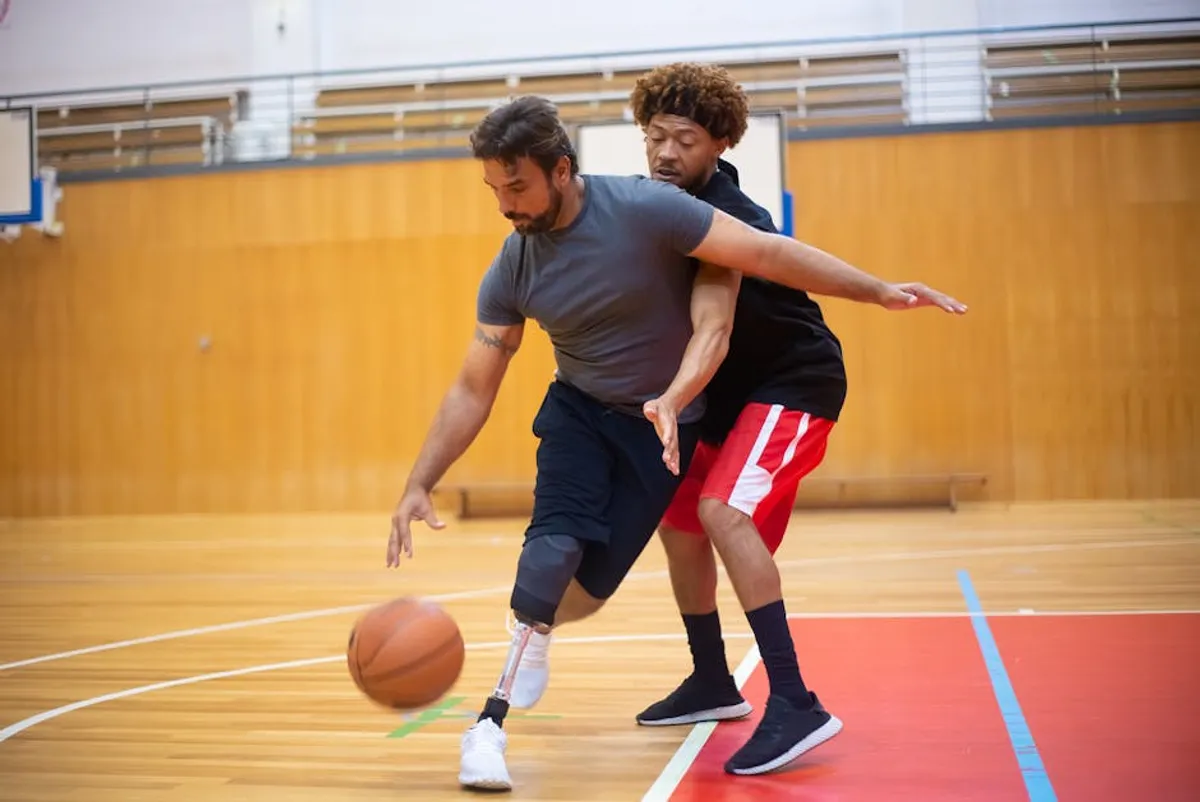
Developing basketball proficiency extends beyond scheduled team practices and gym access. Many of the most impactful improvements in a player's game stem from consistent, focused individual work, often conducted in the privacy of their own home or driveway. This approach allows for repetitive drilling, skill isolation, and personalized attention to weaknesses without the pressure of a game or the limitations of shared court time. By strategically integrating specific drills into a home routine, players can significantly enhance their ball handling, shooting mechanics, defensive footwork, and overall athletic conditioning, translating directly to improved on-court performance.
Structuring Your Home Practice: Key Considerations
Before diving into specific drills, evaluate your available resources and define your practice goals. The effectiveness of home practice hinges on understanding your environment and personal development needs. Consider these factors:
- Space Availability: A small living room allows for stationary ball handling and form shooting, while a driveway or garage permits movement drills, cone work, and possibly shooting if a hoop is present. Adapt drills to your confines.
- Equipment: At minimum, a basketball is essential. Cones or household items (shoes, water bottles) can serve as markers for dribbling and agility. A wall is invaluable for passing drills. A portable hoop significantly expands shooting and finishing options.
- Player's Current Skill Level and Goals: Beginners should prioritize fundamental control and mechanics. Intermediate players can focus on combining skills and increasing speed. Advanced players might emphasize complex moves, conditioning, and mental preparation. Tailor your selection to address specific areas for growth, whether it's becoming a more reliable shooter, a quicker ball handler, or a stronger defender.
- Time Commitment: Short, consistent sessions (15-30 minutes daily) are often more effective than infrequent, long ones. Regular repetition builds muscle memory and reinforces positive habits.
1. Stationary Ball Handling Drills
Stationary ball handling forms the bedrock of offensive basketball, teaching precise control and fingertip manipulation of the ball. These drills focus on developing a natural feel for the basketball, allowing players to dribble without looking down, which is critical for court vision and decision-making. By varying dribble heights, speeds, and positions (e.g., cross-body, between the legs, behind the back), players build a comprehensive command over the ball, essential for navigating defenses and initiating offense.
Best For: All players, particularly beginners and those seeking to enhance fundamental ball security and control in tight spaces.
Pros: Requires minimal space and only a basketball; builds crucial tactile feel and rhythm; highly repeatable for muscle memory development; directly improves ball security and confidence.
Cons: Lacks game-speed pressure and dynamic movement; does not simulate direct defender interaction or decision-making under duress.
Verdict: Indispensable for establishing a strong foundation in ball control, these drills are the starting point for any player aiming to handle the ball effectively under various game conditions.
2. Shooting Form Repetitions (Without a Hoop)
Perfecting shooting form is a continuous process, and much of it can be refined without a hoop. Form shooting drills emphasize the mechanics of a consistent shot: proper hand placement, elbow alignment, wrist flick, and follow-through. By isolating these elements, players can develop repeatable muscle memory, ensuring that when they do get on a court, their shot is built on a solid, efficient foundation. This practice can involve shooting into a couch, a soft wall, or simply extending the ball upwards, focusing purely on the motion.
Best For: All players, especially those needing to establish or refine consistent shooting mechanics and develop a reliable release.
Pros: Isolates and ingrains correct shooting mechanics (B.E.E.F.); requires no hoop, allowing practice anywhere; immediate self-feedback on form; builds confidence in the shooting motion.
Cons: No actual shot trajectory or result; can lead to over-analysis if not balanced with real shooting; lacks the pressure of making a shot.
Verdict: Essential for building a fundamentally sound and repeatable shooting motion, these drills are a non-negotiable step toward becoming a consistent shooter.
3. Wall Passing Drills
Passing accuracy and speed are vital for offensive flow and creating scoring opportunities. Wall passing drills allow players to work on various pass types—chest, bounce, overhead—with immediate feedback on power and precision. The repetitive nature of hitting a target on a wall helps develop a quick release, improves hand-eye coordination, and strengthens the passing muscles. This practice ensures passes are crisp, on target, and delivered with the appropriate velocity, minimizing turnovers and maximizing offensive efficiency.
Best For: All players, particularly guards and those aiming to sharpen their passing game, improve touch, and quicken their release.
Pros: Simulates passing to a teammate with immediate return; develops touch, power, and accuracy; requires minimal equipment (ball, sturdy wall); enhances hand-eye coordination.
Cons: Lacks dynamic movement and defensive pressure; does not replicate game-speed decision-making or passing lanes.
Verdict: Excellent for refining fundamental passing mechanics and developing a crisp, accurate delivery, these drills are crucial for improving offensive teamwork and ball movement.
4. Footwork Drills (Pivoting and Jab Steps)
Effective footwork is the foundation of both offense and defense, enabling players to create space, maintain balance, and react quickly. Pivoting drills teach players to protect the ball, change direction, and create passing or shooting angles using a stationary pivot foot. Jab steps are crucial for creating separation from a defender, setting up a drive, or initiating a shot. Practicing these movements repeatedly at home without a ball or a defender helps ingrain the correct body mechanics and quickness, preparing players for dynamic game situations.
Best For: All players, especially those looking to improve one-on-one offense, post-play, and overall body control.
Pros: Requires no equipment; enhances agility, balance, and body control; directly applicable to creating space and attacking defenders; improves offensive versatility.
Cons: Can feel repetitive; requires strong self-discipline to maintain intensity and focus on precise movements; lacks live defensive reaction.
Verdict: Fundamental for creating offensive advantages and maintaining defensive position, these drills build the essential base for effective movement and playmaking.
5. Defensive Stance and Slides
A strong defensive game starts with proper stance and lateral quickness. Defensive stance and slide drills focus on maintaining a low center of gravity, staying agile on the balls of the feet, and executing quick, explosive lateral movements. Practicing these without a ball or opponent helps build the necessary leg strength, stamina, and muscle memory to stay in front of an offensive player. These drills are critical for developing defensive discipline, preventing blow-bys, and contributing to overall team defense.
Best For: All players, crucial for developing defensive discipline, lateral quickness, and overall agility.
Pros: Improves lateral quickness, conditioning, and core stability; requires no equipment; emphasizes proper body mechanics for effective defense; builds defensive endurance.
Cons: Can be physically demanding; lacks a live opponent for reaction training and reading offensive moves; may feel monotonous without a target.
Verdict: Non-negotiable for becoming a capable defender, these drills establish the physical and technical foundation for effectively guarding opponents and contributing to team defense.
6. Cone Dribbling Drills
Once stationary ball handling is established, cone dribbling drills introduce an element of obstacle navigation, simulating defenders and tight spaces. Using cones, shoes, or any markers, players can practice dribbling in patterns (e.g., figure-eights, zig-zags), executing crossovers, behind-the-back, and between-the-legs moves around obstacles. This enhances control at speed, improves spatial awareness, and develops the ability to change direction quickly while maintaining possession, bridging the gap between static drills and dynamic game play.
Best For: Players looking to advance beyond stationary dribbling, improving agility with the ball and handling in congested areas.
Pros: Introduces dynamic movement and obstacle navigation; improves control at varying speeds and directions; enhances spatial awareness and quick decision-making with the ball; easily scalable in difficulty.
Cons: Requires cones or markers; still lacks the unpredictability and physical contact of a live defender.
Verdict: A vital progression from basic dribbling, these drills are crucial for developing game-realistic ball handling and the ability to maneuver effectively with the ball.
7. Bodyweight Strength & Conditioning
Overall athleticism underpins every basketball skill. Bodyweight strength and conditioning exercises build explosive power, core strength, and endurance without requiring gym equipment. Drills like squats, lunges, push-ups, planks, and burpees develop the muscles used in jumping, sprinting, and maintaining defensive intensity. Consistent practice of these exercises at home reduces injury risk, improves stamina, and enhances a player's ability to perform at a high level throughout a game.
Best For: All players, essential for injury prevention, jumping ability, speed, and overall athletic performance on the court.
Pros: Requires no equipment; improves overall athleticism, explosive power, and endurance; can be done in small spaces; builds core stability and functional strength.
Cons: May not provide sufficient resistance for advanced strength gains without added weight; requires strong self-motivation for consistent execution and progression.
Verdict: A foundational component of athletic development, these exercises directly support all on-court actions, enhance physical durability, and contribute significantly to a player's performance.
8. Imaginary Layup/Finishing Drills
Even without a hoop, players can significantly improve their finishing ability around the rim through visualization and footwork drills. These practices involve simulating attacking the basket, practicing various footwork patterns (e.g., euro step, spin move, jump stop), and protecting the ball from imaginary defenders. The focus is on developing body control, creativity, and the proper sequence of steps for different finishes. This mental rehearsal and physical repetition build confidence and muscle memory for when a hoop is available.
Best For: Players looking to improve their scoring around the rim, especially those without consistent access to a basketball hoop.
Pros: Develops creative finishing moves and footwork patterns; enhances body control and spatial awareness; requires no equipment; fosters mental rehearsal and visualization.
Cons: Lacks actual shot execution and result; relies heavily on visualization and self-correction; does not involve contact or live defensive pressure.
Verdict: Valuable for mental rehearsal and developing the diverse footwork patterns associated with attacking the basket, these drills enhance a player's finishing repertoire.
9. Rebounding Box-Out Drills
Rebounding is often about positioning and effort, skills that can be honed at home. Box-out drills teach players the fundamental technique of establishing and maintaining position against an opponent to secure a rebound. These drills emphasize getting low, making contact, and extending arms to create a barrier. Practicing these movements repeatedly without an opponent helps ingrain the proper body mechanics and aggressive mindset needed to win contested rebounds, directly impacting possession control and second-chance opportunities.
Best For: All players, particularly bigs and wings, crucial for securing possessions and contributing to team defense and offense.
Pros: Improves body positioning, leverage, and spatial awareness; requires no equipment; directly impacts game performance by securing possessions; builds a competitive mindset.
Cons: Lacks a live opponent for contact and reaction; requires strong visualization and self-discipline to simulate game intensity.
Verdict: A critical skill for possession control, these drills reinforce the physical mechanics of effective rebounding, turning effort into tangible results.
10. Speed Dribbling Drills
Transition offense and beating defenders off the dribble require the ability to handle the ball effectively at high speeds. Speed dribbling drills focus on pushing the ball out in front, maintaining control with powerful dribbles, and covering ground quickly. These drills can be performed in a driveway or any open space, emphasizing explosive bursts and sustained speed while keeping the ball secure. Developing this skill is essential for guards leading fast breaks and forwards looking to attack the basket from the perimeter.
Best For: Guards and wings, crucial for leading fast breaks, beating defenders off the dribble, and initiating transition offense.
Pros: Improves speed with the ball and control at high tempos; enhances explosiveness and coordination; can be done in a driveway or open space; directly applicable to fast-break situations.
Cons: Requires more space than stationary drills; still lacks game-speed decision-making under defensive pressure; can be physically demanding.
Verdict: Develops the crucial ability to advance the ball rapidly and effectively, a cornerstone of modern basketball that creates scoring opportunities and puts pressure on the defense.
11. Mental Visualization & Focus Exercises
Basketball is as much a mental game as it is physical. Mental visualization and focus exercises allow players to mentally rehearse game