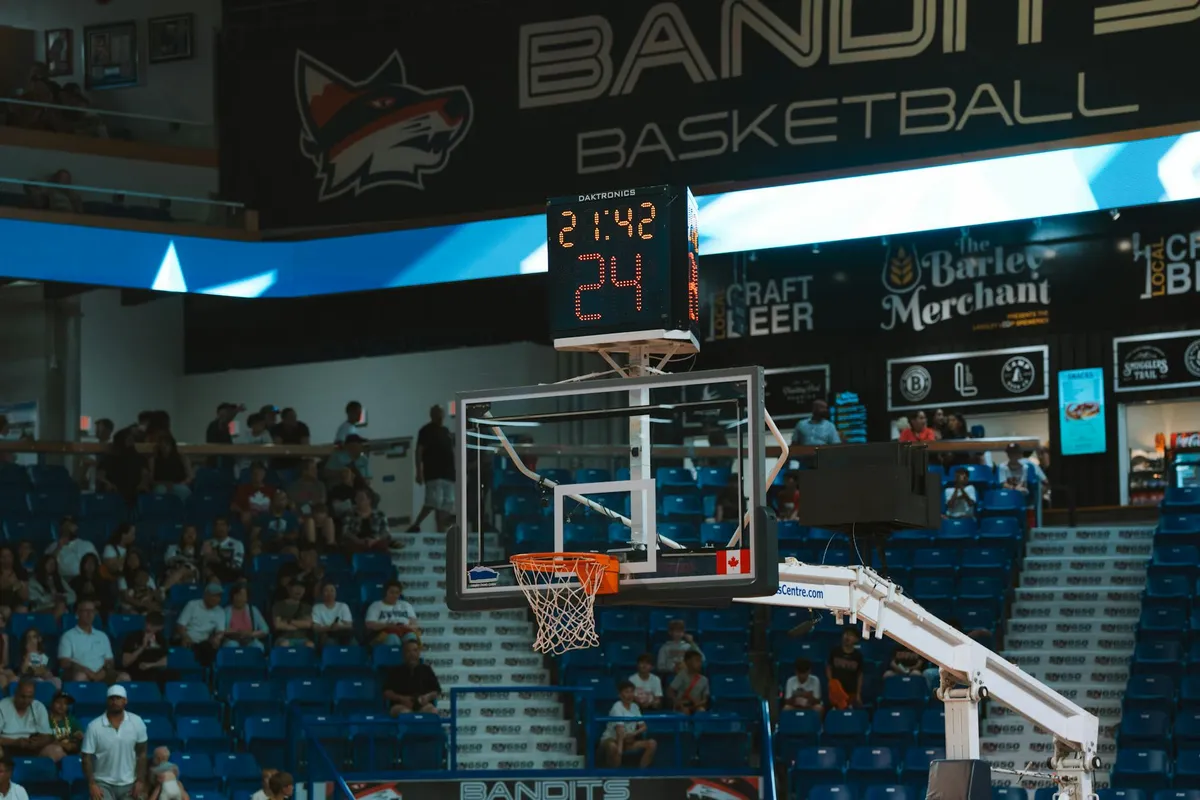
We're fourteen games into the BK Nitra season. The team has shown specific patterns that deserve honest discussion. Some are encouraging. Some are concerning. Some are too early to assess properly.
This is my honest take. No pretending things are better than they are. No catastrophizing things that are actually fine. Just what I'm seeing through 14 games.
The basics
Through 14 games, BK Nitra is sitting at a record that's about what you'd expect given the squad and the league this year. Not where the most ambitious fans hoped. Not where the most pessimistic feared. Roughly middle of expectations.
The points-for and points-against differential tells more than the win-loss record. The team is competitive in most games. Few blowouts in either direction. Several close losses that could have gone differently.
The middle-of-expectations record reflects competitive but not dominant performance. Given the squad, that's reasonable.
What's working
The defensive intensity in the first half. First-half defense has been substantially better than last season. The team is contesting shots, getting hands in passing lanes, forcing turnovers. The improvement is real and visible.
The bench scoring. Bench production has been stronger than expected. Specific players are contributing meaningful points and minutes that allow the starters appropriate rest.
The home court advantage. Home performance is substantially better than road performance. The arena energy is producing real on-court advantage.
The development of younger players. The youth players getting minutes are showing real development. Not all of them will make substantial careers but several look like they'll be contributors next season.
The team chemistry visibly. The on-court interactions look genuinely positive. Players celebrating each other. Communication during play. Whatever the coaching staff is doing for chemistry seems to be working.
What's not working
Third-quarter performance. The team consistently loses ground in third quarters. Whether it's adjustment failures, conditioning issues, or attention problems, the third-quarter pattern is real and persistent.
Free throw shooting. Free throw percentage is below where it should be. In close games, the missed free throws cost specific games.
Defensive transition. The team defends well in halfcourt but struggles in transition. Specific games have been lost to easy transition baskets.
Rebounding consistency. Some games show strong rebounding; others show concerning weakness. The inconsistency is harder to address than uniform weakness.
Late-game execution. Several close games have been lost in final minutes through specific execution failures. The pattern suggests practice attention to late-game scenarios is needed.
The specific player situations
Without naming specific players (sensitive in local context), the player situations:
The starting point guard situation. Solid but not exceptional play. The position needs production that isn't consistently arriving.
The shooting guard rotation. Multiple players competing for minutes. The rotation hasn't fully settled. Some games look better than others depending on who's getting minutes.
The frontcourt depth. Solid starters but limited depth. Injuries to starting frontcourt players would be substantially problematic.
The veteran leadership. The senior players are contributing the leadership the team needs. Their value extends beyond statistical contributions.
The youth development. Several young players showing real promise. The development trajectory looks sustainable.
What the coaching is doing well
The coaching staff has produced specific positive results:
Defensive scheme that's working substantially better than last season.
Player development pathway that's producing real improvement.
Lineup management that's generally appropriate to game situations.
Practice work that addresses specific identified weaknesses (mostly).
Communication with players that's produced visible team chemistry.
The coaching staff deserves credit for these specific successes.
What the coaching could improve
Areas where coaching adjustments could help:
Late-game execution work in practice.
Specific attention to free throw shooting.
Transition defense practice and strategy.
Third-quarter adjustment patterns.
Specific lineup combinations that haven't been tried but might produce better results.
None of these are major criticisms. They're specific opportunities for improvement.
The league context
Our season has to be understood in the league context:
The top of the league is substantially stronger than middle and bottom.
The middle of the league is competitive — multiple teams could finish in various positions.
BK Nitra fits in the competitive middle. We can beat anyone except the top teams. We can lose to teams below us if we don't play well.
The trajectory shows modest improvement from last season. The improvement is real but limited.
Realistic season expectations should reflect this context.
The fan expectations question
Fan expectations vary substantially:
The most optimistic fans expected playoff contention. That looks unlikely.
Realistic fans expected the competitive middle position with potential for upset wins. That's what we're getting.
The most pessimistic fans feared a bottom-of-table situation. That's not happening.
Reality is closer to realistic expectations than to either extreme. Fans whose expectations were realistic should be reasonably satisfied.
Fans whose expectations were extreme will be disappointed. Their disappointment is more about expectations than about team performance.
The remaining season
What to watch in the remaining games:
Whether third-quarter problems get addressed.
Whether bench production sustains across the rest of the season.
Whether young players continue developing.
How the team performs against specific top teams in remaining matchups.
Whether late-game execution improves with practice attention.
Each watching point provides specific evidence about season trajectory.
The off-court situation
Beyond on-court performance, the off-court situation matters:
Attendance has been reasonably strong this season. The arena gets to substantial capacity for important games.
The youth development program continues to produce players for the senior team.
Sponsorship and financial situation appears stable.
Off-court drama has been limited compared to past seasons.
The off-court stability supports on-court development. Buildings of programs require this stability.
What I want for the rest of the season
Specific things I'd like to see:
Address the third-quarter pattern through specific practice work and tactical adjustments.
Improve free throw shooting through specific practice attention.
Continue developing young players even when they make mistakes.
Win the games against teams we should beat (we've dropped a couple of these).
Compete hard against top teams even if we don't win.
Each represents specific achievable improvement that would make the season feel substantially better.
What I'm not worried about
For balance, things that aren't major concerns:
Team chemistry. The team gets along well.
Coaching commitment. The staff is putting in real work.
Player effort. The team is competing in most games.
Long-term direction. The youth development is producing future contributors.
Financial stability. The club appears stable.
The non-concerns matter for season interpretation. Buildings of programs need these foundations.
Comparing to last season
Year-over-year comparison shows specific improvement:
Defensive performance is meaningfully better.
Bench production is stronger.
Team chemistry is visibly better.
Youth development is producing more visible results.
Some areas remain comparable rather than improved:
Offensive execution is similar.
Rebounding remains inconsistent.
Late-game execution remains a problem.
The mixed comparison reflects real but limited progress.
The fan engagement
For fans wanting to engage substantively:
Attend games. The energy matters and the team plays better with strong home support.
Engage with team communications constructively. Criticism is fine; harassment isn't.
Support youth development. The future of the club depends on it.
Discuss the team substantively rather than just emotionally. Specific tactical and personnel discussions improve fan culture.
Recognize the realistic context. Expecting championship contention from a competitive-middle team produces disappointment that doesn't reflect actual situation.
Engaged fans contribute to team success in specific ways.
The honest summary
BK Nitra at game 14 is roughly where realistic expectations placed us. Some specific positive developments. Some specific persistent problems. Overall trajectory is modest improvement from last season.
For fans, the honest assessment is reasonably encouraging without being exciting. We're a competitive middle team with specific strengths and specific weaknesses. The season won't produce championships but should produce solid basketball with continued development.
For the team, specific areas of improvement are identifiable. Continued attention to those areas could produce meaningful progress through the remaining season.
For the coaching staff, the work is producing real results in specific areas. Continued attention to identified weaknesses could produce broader improvement.
This is what middle-of-the-table basketball looks like in honest assessment. Not exciting. Not bad. Specifically real with specific opportunities for improvement.
That's the take through 14. We'll see what the rest of the season brings.
Up the BK Nitra. Up Slovak basketball. Up the modest but real improvement that we're actually getting.