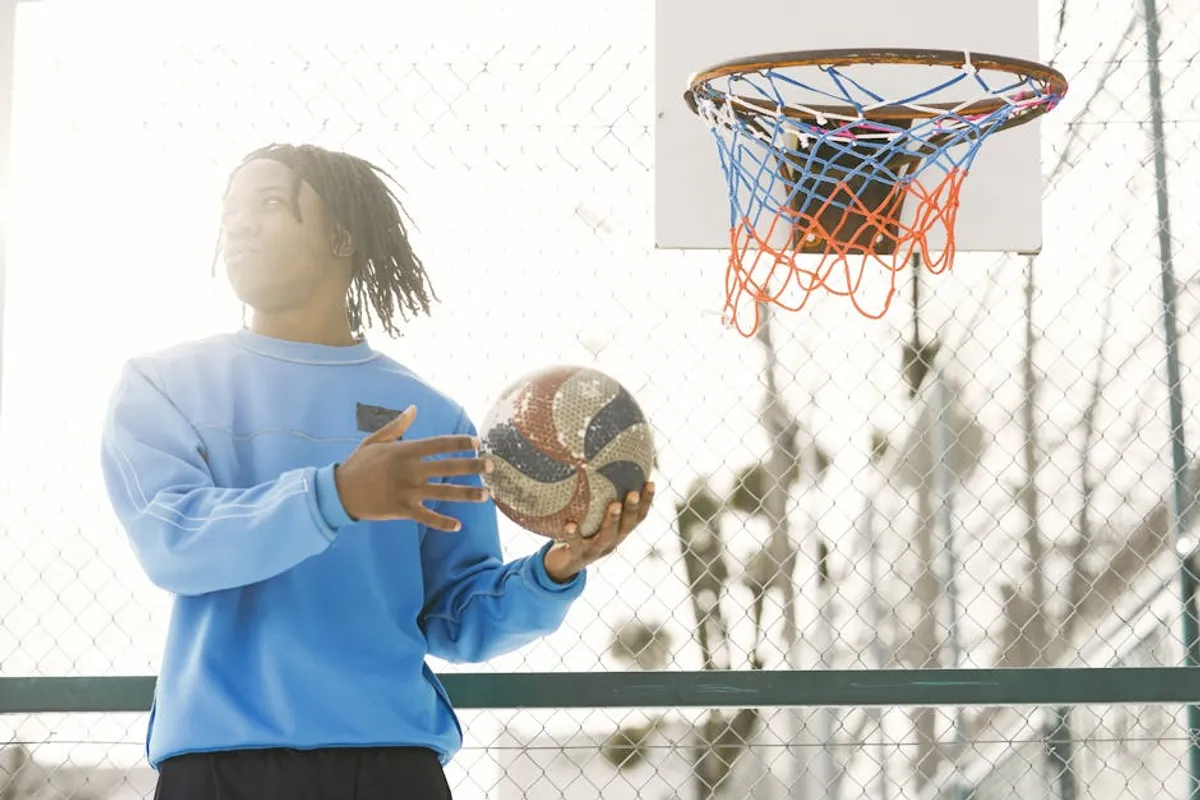
Coaching youth basketball presents a unique blend of challenge and reward. Unlike professional or even high school coaching, the primary objective shifts from pure victory to holistic player development, fostering a love for the game, and instilling critical life skills like teamwork and resilience. Effective youth coaching requires a deliberate approach that balances fundamental skill acquisition with creating an engaging, positive environment. This guide provides actionable strategies to help coaches navigate these demands, ensuring players develop both on and off the court, laying a strong foundation for future athletic and personal growth.
Building Foundational Skills
The bedrock of any successful basketball player is a solid grasp of fundamental skills. For youth coaches, this means breaking down complex movements into manageable, repeatable actions that build confidence and muscle memory.
Dribbling Fundamentals
Effective ball-handling is non-negotiable. Coaches should emphasize proper technique from the outset, focusing on the following core elements:
- Fingertip control: Players must learn to push the ball with their fingertips, not their palm, to maintain control and quickness.
- Eyes up: Encourage players to keep their head up and scan the court, rather than watching the ball. This develops court awareness crucial for passing and shooting.
- Protecting the ball: Teach players to keep the ball low and use their non-dribbling arm as a shield to prevent steals.
Practical drills: Start with stationary dribbling (right hand, left hand, cross-over), then progress to moving dribbles (straight line, change of pace). Incorporate two-ball dribbling for advanced control and coordination.
Passing Precision
Basketball is a team sport, and accurate passing is the primary mechanism for ball movement and offensive flow. Focus on teaching:
- Chest pass: The most fundamental pass, teaching players to step into the pass, extend arms, and snap wrists, aiming for the receiver's chest.
- Bounce pass: Essential for passing around defenders or into the post. Emphasize aiming for a spot two-thirds of the way to the receiver.
- Overhead pass: Useful for clearing defenders or initiating fast breaks. Requires a strong core and precise timing.
Key consideration: Stress the importance of passing to a target, not just "in the vicinity." Drills should involve partners and incorporate movement to simulate game situations.
Shooting Mechanics
Proper shooting form is critical for consistency. Introduce the "BEEF" acronym as a mnemonic:
- B - Balance: Feet shoulder-width apart, knees slightly bent, balanced stance.
- E - Eyes: Focus on the rim, specifically the front or back of it.
- E - Elbow: Keep the shooting elbow under the ball, aligned with the knee.
- F - Follow-through: Extend the arm fully towards the basket, with the wrist flexed ("hand in the cookie jar").
Begin with form shooting close to the basket, gradually increasing distance as form solidifies. Repetition with correct mechanics is more valuable than shooting many shots with poor form.
Cultivating Teamwork and Game IQ
Beyond individual skills, youth players must learn to play together and understand basic game concepts. This involves both offensive and defensive principles, alongside fostering effective communication.
Defensive Principles
Defense often gets less attention than offense, but it's foundational to team success. Teach:
- Defensive stance: Low hips, wide base, hands active.
- Footwork: Shuffle steps, not crossing feet, to stay in front of the offensive player.
- Communication: Calling out screens, cutters, and help-side responsibilities.
- Help defense: Basic concepts of rotating and helping a teammate who has been beaten.
Actionable advice: Start with simple man-to-man defense drills, emphasizing staying between the opponent and the basket. Gradually introduce help-side concepts in small-sided games.
Offensive Concepts
While complex plays are often too advanced for youth teams, teaching basic offensive principles creates structure:
- Spacing: Emphasize staying spread out to create driving lanes and passing opportunities. Avoid "bunching up."
- Cutting: Teach players to cut to the basket or to open spaces when they don't have the ball.
- Screening: Basic pick-and-roll or pick-and-fade actions can be introduced with proper instruction on setting and using screens safely.
Strategy: Implement simple offensive sets like a 3-out, 2-in or 4-out, 1-in formation to provide structure without stifling creativity.
Communication and Sportsmanship
These are life skills reinforced through sports. Coaches must actively promote:
- Positive communication: Encouraging teammates, calling out plays, and acknowledging good efforts.
- Respect: For opponents, officials, and teammates, regardless of the game's outcome.
- Handling adversity: Teaching players to manage frustration, learn from mistakes, and maintain composure during challenging moments.
Coaching method: Lead by example. Demonstrate respect and positive communication yourself, and consistently reinforce these behaviors in practices and games.
Practice Planning and Management
Well-structured practices maximize player engagement and skill development. A chaotic or overly repetitive practice quickly leads to disinterest.
Structuring Effective Practices
A balanced practice typically includes:
- Warm-up (5-10 minutes): Dynamic stretching, light jogging, fundamental movements.
- Skill work (20-30 minutes): Focused drills on 1-2 specific skills (e.g., dribbling, shooting).
- Small-sided games (15-20 minutes): 3-on-3 or 4-on-4 to apply skills in a game-like setting.
- Team concepts (10-15 minutes): Working on offensive or defensive principles.
- Cool-down (5 minutes): Static stretching and a brief team talk.
Key consideration: Keep drills short and engaging. Young players have limited attention spans, so rotate activities frequently to maintain focus and energy.
Differentiating Instruction
Youth teams often have a wide range of skill levels. Coaches must adapt:
- Modifying drills: For less experienced players, simplify drills or provide more direct assistance. For advanced players, add complexity or challenge.
- Individual feedback: While coaching the team, find opportunities for one-on-one instruction to address specific player needs.
Best for: Ensuring every player feels challenged but not overwhelmed, fostering individual growth within the team context.
Pro Tip: Prioritize Development Over Wins
For youth basketball, the objective isn't solely to win games. Focus on individual player development, skill acquisition, and fostering a positive experience. Wins will naturally follow improvement, but a win-at-all-costs mentality often stifles growth and enjoyment, leading to burnout. Measure success by player improvement, engagement, and retention rather than just the scoreline.
Fostering a Positive Environment
A positive coaching environment is paramount for player retention and long-term development. Players are more likely to learn and excel when they feel supported and valued.
Building Confidence
Confidence is a fragile but critical component of athletic performance:
- Positive reinforcement: Acknowledge effort and improvement, not just perfect execution. Specific praise ("Great hustle getting back on defense!") is more effective than generic praise.
- Mistake management: Frame mistakes as learning opportunities. Encourage players to try new things without fear of failure.
- Small successes: Set achievable goals and celebrate when they are met, building momentum and self-belief.
Managing Behavior and Motivation
Coaches are also mentors. Effective behavior management and motivation techniques include:
- Clear expectations: Establish team rules and expectations for behavior, effort, and sportsmanship early in the season.
- Making it fun: Incorporate games, competitions, and variety into practices to keep players engaged and motivated.
- Intrinsic motivation: Help players discover their own reasons for playing and improving, rather than relying solely on external rewards.
Sustaining Player Growth and Team Cohesion
Effective youth basketball coaching is an ongoing process of development—for both players and coaches. Focus on a balanced approach that prioritizes skill acquisition, teamwork, and a positive, encouraging atmosphere. Consistency in teaching fundamentals, adaptability in practice planning, and a genuine commitment to each player's individual growth will yield the most significant returns. Remember that the ultimate goal is to cultivate a lifelong love for the game, alongside instilling valuable life skills that extend far beyond the court.
Frequently Asked Questions
How long should youth basketball practices be?
For younger age groups (e.g., 6-10 years old), practices should typically be 60-75 minutes. For older youth (11-14 years old), 75-90 minutes is often appropriate. Shorter, more focused sessions are generally more effective than longer, unfocused ones due to attention spans.
What's the most important skill to teach young players?
While all fundamentals are important, ball-handling (dribbling and passing) is arguably the most crucial. Players who can confidently handle and move the ball are better able to participate in the game, create opportunities, and contribute to team play, regardless of their height or shooting ability.
How do I handle parents who are too focused on winning?
Open communication is key. Before the season, clearly articulate your coaching philosophy, emphasizing player development, sportsmanship, and fun over immediate wins. Reiterate that mistakes are part of learning. If issues arise, address them privately and professionally, redirecting focus to the positive aspects of youth sports.
What age is appropriate to introduce complex plays?
Generally, complex set plays are best introduced after players have a solid grasp of fundamental skills, court awareness, and basic offensive/defensive principles. For most youth leagues, this might be around ages 12-14. Younger teams benefit more from teaching spacing, cutting, and basic movement concepts rather than memorizing rigid plays.